
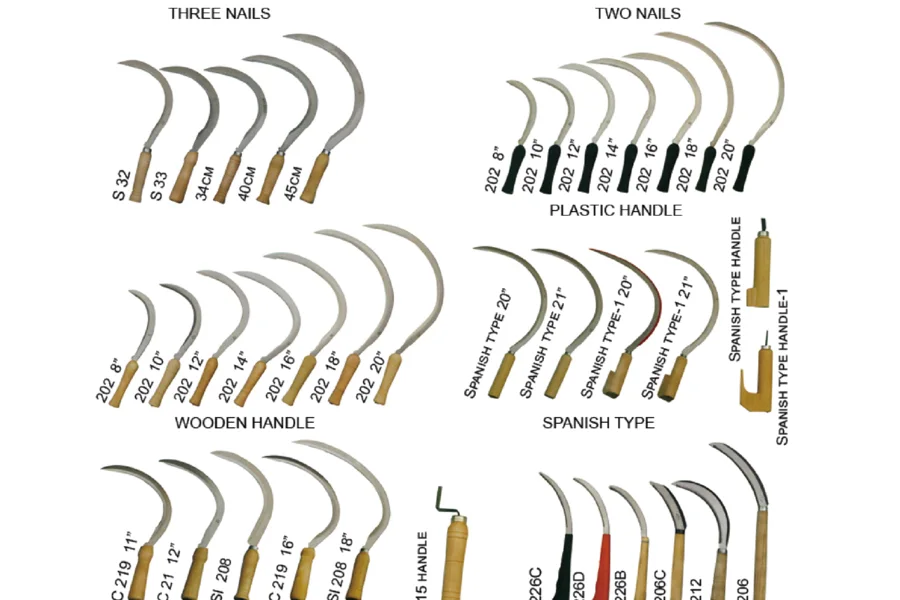
For many agricultural tool importers, sickles are not just one SKU. A practical sickle range often includes different blade sizes, edge styles, handle materials, sleeve packing, and price levels for farm supply shops, garden centers, supermarkets, and local wholesalers.
This guide introduces several sickle products that can sit together in one B2B buying program. The goal is not to push one model as the only option, but to help buyers compare common product positions before asking for quotation, samples, packing photos, and carton details.
1. Japanese garden sickle for garden and light harvesting ranges
The Japanese Garden Sickle with Wood Handle is a useful starting item for buyers who need a clean garden-tool style product. Its wood handle and compact blade shape make it suitable for trimming, garden cutting, crop harvesting, and retail farm-tool assortments.
For quotation, buyers should confirm the blade length, handle length, edge style, sleeve or label requirement, and whether the market prefers a 6.5 inch or 7.5 inch reference size. If you need a smaller garden-focused item, the 6.5-inch Japanese Sickle can work as a lighter option for garden centers and retail packs.
2. Serrated rice sickle for harvesting and farm supply channels
The Serrated Rice Sickle for Export Packing is positioned more toward rice harvesting, grass cutting, forage work, and agricultural retail. Serrated edge style is important here because buyers often compare cutting feel, tooth consistency, and blade finish before approving bulk production.
When reviewing samples, ask for close photos of the tooth line, handle fixing, blade thickness direction, and sleeve packing. For cutting tools, the general checks in the sickle and machete sample checklist are especially relevant because small differences in edge, handle, and packing can affect repeat orders.
3. Plastic handle sickle for retail display and sleeve packing
The Plastic Handle Sickle with Paper Sleeve can be useful when buyers need a more retail-ready appearance. Plastic handles, color options, barcode stickers, and paper sleeves make the product easier to position for supermarkets, farm shops, and promotional seasonal displays.
For this type of product, packing is part of the sales presentation. Confirm sleeve artwork size, barcode position, warning text, carton quantity, and whether the handle color should match the buyer's existing tool range. The private label hardware tool packing guide explains the artwork and carton-mark checks that should happen before bulk order.
4. Two-nail fixed steel sickle for traditional farm-tool markets
The Two Nails Steel Sickle is a practical choice for markets that prefer visible handle fixing and traditional agricultural tool construction. Buyers often ask for this style when local users care more about durability, simple replacement, and familiar tool shape than retail decoration.
Before confirming this type, check the handle fixing, blade curve, nail position, wood handle finish, and carton protection. If the product is shipped with other long tools, such as hoes, shovels, or machetes, it is better to plan carton dimensions early instead of treating every item as an isolated SKU.
5. Agricultural steel sickle for broader farm supply assortments
The Agricultural Steel Sickle is suitable for buyers building a general farm-tool line. It can sit beside hoes, shovels, forks, rakes, machetes, and other agricultural hand tools in a wholesale catalog.
For importers, the key question is whether this item will be sold as a basic farm supply SKU, a retail packed garden SKU, or part of a mixed agricultural tool program. The answer affects finish, label, carton quantity, MOQ, and inspection focus.
6. How to organize a sickle buying list
A clear buying list should separate each sickle by model, blade length, handle material, edge style, packing method, target market, and expected quantity. Instead of writing only "sickle", use names such as Japanese garden sickle, serrated rice sickle, plastic handle sickle, two-nail steel sickle, or agricultural steel sickle.
When the sickle order is part of a larger hardware shipment, the broader hardware tools buying list for importers can help organize product names, photos, sizes, handles, carton marks, and quotation notes before sending the inquiry.
7. Sample and quotation checkpoints
For a sickle quotation, prepare the following points before asking for final price:
- Blade type: plain edge, serrated edge, Japanese style, rice sickle, or agricultural sickle.
- Blade size and reference model: 6.5 inch, 7.5 inch, or market-specific dimensions.
- Handle material: wood handle, plastic handle, or traditional fixed handle.
- Packing: paper sleeve, barcode label, color box, bundle, or export carton only.
- Carton details: quantity per carton, gross weight, carton mark, and loading concern.
- Market use: farm supply, garden retail, supermarket display, or mixed hardware wholesale.
Good product selection starts with the selling channel. A garden center may prefer a clean Japanese sickle with sleeve packing. A farm supply wholesaler may prefer serrated rice sickles and two-nail fixed styles. A supermarket program may care more about plastic handles, barcode labels, and neat retail sleeves.
China Tools Supply can help compare sickle models, packing options, sample notes, carton marks, and mixed hardware order planning. Share your target market, product photos, expected quantity, and packing direction so the quotation can be matched to the actual sales channel.