
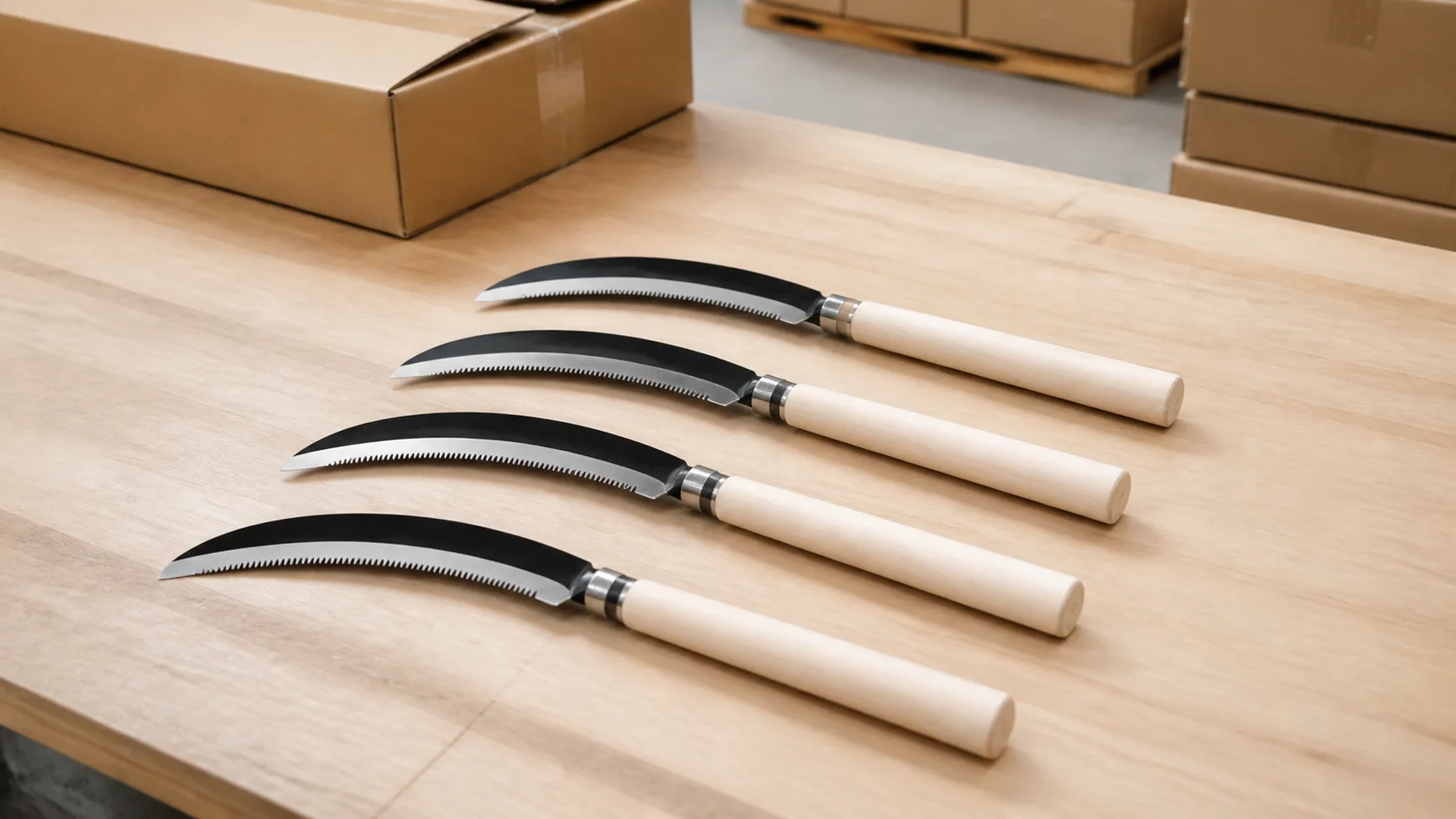
A 6.5-inch Japanese sickle is a compact SKU for buyers who serve garden retailers, farm supply shops, crop-harvesting programs, or seasonal tool assortments. The product record identifies a carbon steel blade, wooden handle, and 6.5-inch reference model. The supplied image shows a dark crescent-shaped blade with fine teeth along the inner cutting edge and a slim straight handle. That compact profile should be treated as its own product line, not as a shortened description for every curved harvesting tool.
Start an inquiry from the 6.5-inch Japanese Sickle product page and attach the selected image or model reference. State the required blade and handle configuration, requested quantity, sales channel, package direction, destination market, and carton-mark needs. A compact sickle may be easy to describe informally, but small changes in the blade form, serration, handle, sleeve, or box arrangement can change the final retail presentation and quotation.
Keep the compact Japanese pattern on its own SKU line
The 6.5-inch reference is intended for buyers who need a smaller curved sickle format. In the reference, the working end follows a crescent profile and the teeth sit on the inner curve. The handle is a straight light wood style. These visible points help separate this item from a long serrated harvesting sickle, a plastic-handle retail sickle, a two-nail agricultural sickle, or a larger machete. When buyers combine several cutting tools in one order, each item needs its own model name, sample image, packing instruction, and carton identification.
Do not assume a confirmed steel grade beyond the listed carbon steel blade, an exact tooth count, blade thickness, unit weight, or cutting performance from a photograph. Buyers with a technical requirement should state it directly. The practical reference file should keep the selected 6.5-inch profile, edge style, handle requirement, requested finish, packing direction, label needs, and sample status together. That makes it easier to distinguish an approved compact Japanese sickle from a similar-looking item in a later shipment or reorder.
Confirm the serrated edge and handle reference with a sample
A sample should show the full blade curve, both blade faces, the serrated inner edge, the point and heel of the blade, the blade-to-handle connection, and the complete handle. The buyer can then compare the actual sample with the selected product reference before approving a bulk order. If the market needs a particular surface appearance, handle finish, label position, or retail presentation, those requirements should be listed with the sample rather than inferred from a catalog image.
The sickle product range guide is useful when a buyer is planning a wider assortment. It explains why blade type, size, handle style, and packing need to be compared by sales channel. The 6.5-inch Japanese pattern can sit beside other sickles in a range, but it should not share one loose specification with longer harvesting models. Separate product records keep retail buyers, warehouse teams, and receiving teams aligned on the intended item.
Match the packing method to the sales channel
Compact sickles are often handled in large quantities, so blade protection and SKU separation need attention from the beginning. Paper sleeves, cardboard blade covers, individual retail sleeves, inner boxes, bundle packing, export cartons, labels, and carton marks can be discussed according to the buyer’s needs. The selected method should cover the exposed working end during handling and prevent blades from rubbing against adjacent handles or products in transit.
For garden or farm retail, a buyer may need a clean sleeve or printed retail presentation. For distribution or wholesale, the emphasis may be on inner-box quantity, carton dimensions, gross weight, bundle arrangement, and easy SKU identification. Do not copy packing information from another sickle or a longer tool without confirmation. The pack should be checked against the approved 6.5-inch item, actual handle length, selected sleeve, and destination handling requirements.
Use QC photos to compare goods with the approved sample
A focused pre-shipment photo list can show the full compact blade profile, the serrated inner curve, the handle, the selected surface appearance, protective sleeve, inner-box or bundle arrangement, carton quantity, carton view, and carton marks. If multiple sickle types are in one order, organize photos by product code and packing line. A mixed set of general warehouse images does not make it easy for the buyer to confirm which compact sickle has been packed.
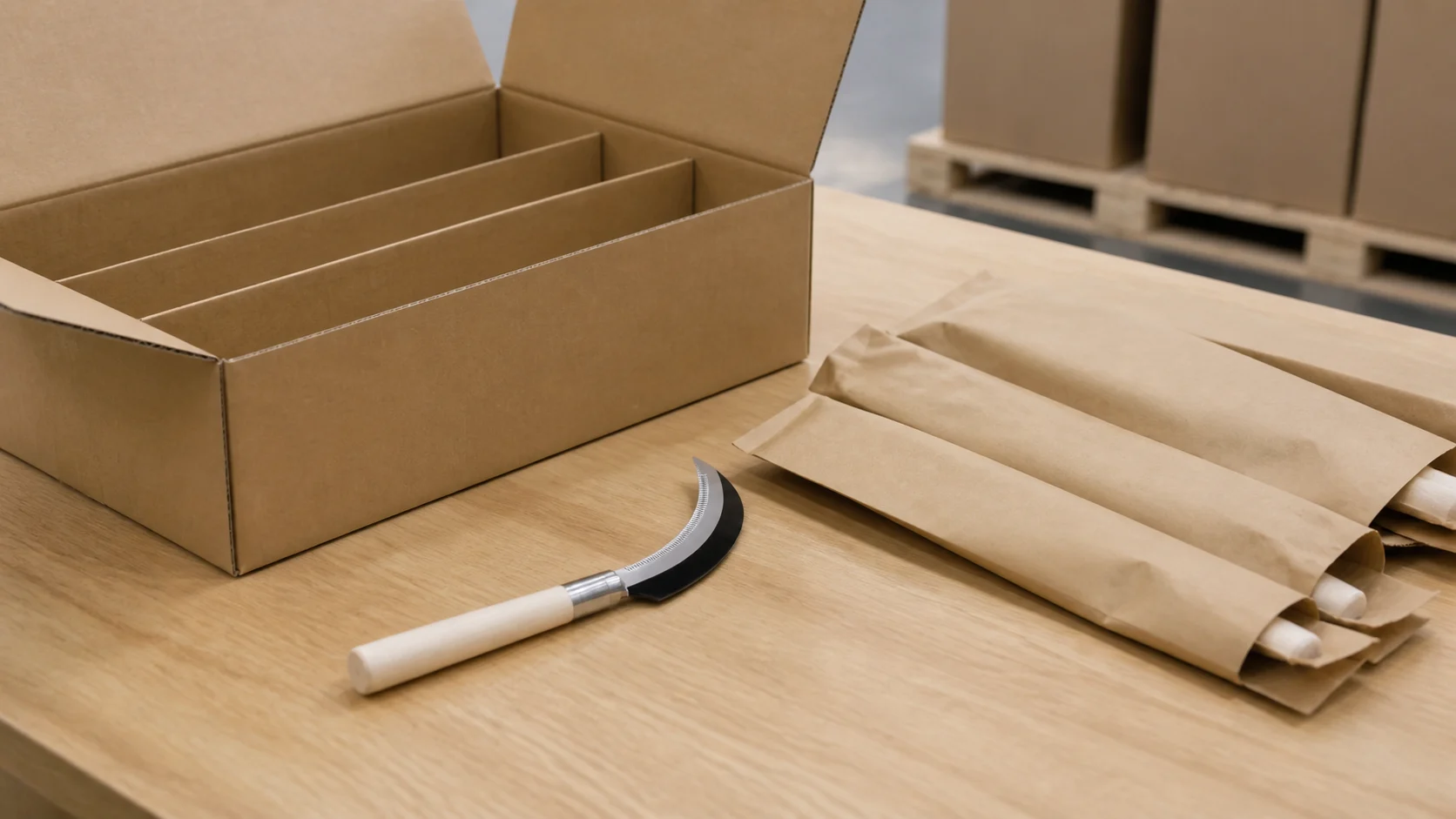
Before shipment, confirm that the sample and packed goods show the same compact sickle profile, edge reference, handle style, sleeve arrangement, and carton identification. If labels or artwork are required, retain the approved position and version with the model record. This simple check is particularly useful for importers selling multiple agricultural tools through different channels, where a similar blade shape can otherwise be mixed into the wrong retail package.
Prepare a compact quotation file for repeat orders
A good quotation for this item does not need unsupported technical claims. It does need enough information for the buyer to recognize the exact compact sickle being quoted. Keep the product title, selected reference image, required configuration, blade and handle direction, requested quantity, packaging level, unit or inner-pack request, carton information, destination market, and quotation validity together. If the buyer is comparing several sickle types, use a separate row for each profile instead of placing them under one general “Japanese sickle” line.
For a retail-oriented request, include the sleeve or label artwork status, the required language, barcode location if supplied by the buyer, and carton-mark wording. For a wholesale request, focus on unit arrangement, inner boxes where applicable, carton quantities, and product identification at receiving. In both cases, a confirmed sample photo and a final packing photo are more useful than broad claims about a tool range. This record also gives purchasing teams a practical reference when they return to the same item in the next season or add it to a larger agricultural assortment.
Build a practical agricultural tool buying list
The Sickles category gives buyers a starting point for comparing related Japanese, serrated, wood-handle, plastic-handle, and retail-packed options. It is a comparison tool rather than one specification. Record each selected sickle separately with its image, model, size reference, blade and handle direction, packing, quantity, and sample result. That structure supports clearer quotations and makes repeat buying more dependable.
A compact 6.5-inch Japanese sickle can be combined with compatible agricultural tools, garden tools, construction hardware, or cutting consumables in a single purchase program. The mixed-container hardware service helps buyers coordinate several categories while keeping every SKU, carton requirement, and protection need distinct. There is no need to treat one sickle line as a full-container order when the buying list includes other practical products.
For a clear quotation, send the selected product reference, required configuration, target quantity, sample request, package or retail sleeve direction, carton marks, destination market, and any additional products planned for the same order. China Tools Supply can then organize a focused product comparison, sample discussion, packing confirmation, QC photo list, and export plan around the buyer’s actual purchasing requirements.