
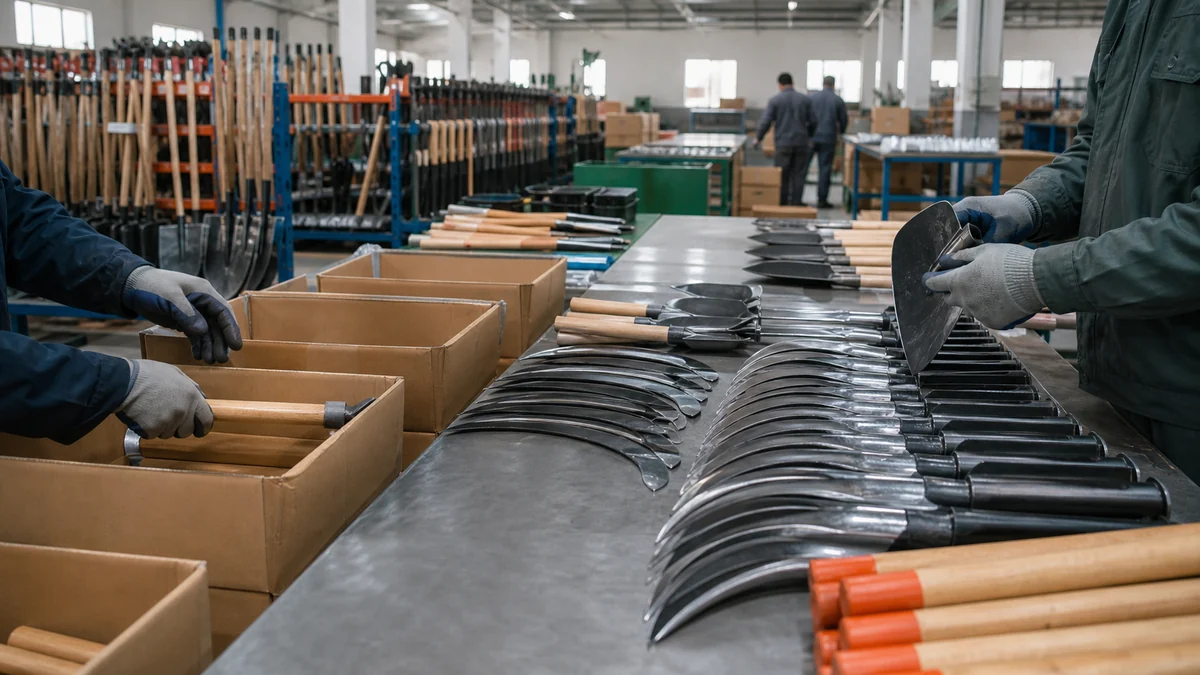
Private label packing is common in hardware tool export orders, but it should be planned before final price confirmation. A paper sleeve, barcode sticker, color label, carton mark, hanging card, or retail box can change material cost, labor time, MOQ, carton size, and sample approval requirements.
This guide is for importers preparing private label programs across hand tools, garden tools, agricultural cutting tools, nails, wire mesh, and mixed hardware orders. It works together with the broader hardware tools buying list, but focuses specifically on packing and labeling.
1. Decide whether the product is wholesale packed or retail packed
Wholesale packing focuses on protection, carton mark, quantity, and handling. Retail packing also needs shelf presentation, barcode, logo, warning text, product name, size, and sometimes local language. A machete with a simple blade sleeve and a retail-ready garden tool set are different packing projects even if both are hardware tools.
2. Prepare artwork files early
Artwork should be prepared before bulk packing, not after production. Confirm logo, product name, size, barcode, warning text, origin statement where required, and any destination-market label language. If the artwork is not final, ask for neutral packing first or separate the private label requirement from the first sample quotation.
3. Use samples to approve both product and packing
Product samples and packing samples should be checked together. For cutting tools such as machetes and sickles, confirm whether the sleeve protects the edge and whether the label position looks correct. For shovels, hoes, forks, and rakes, check whether the label stays secure during handling. For nails and mesh, confirm box, bag, roll label, and carton mark.
4. Keep carton marks consistent
Carton marks should support warehouse receiving. Product name, model, size, quantity, gross weight, net weight, carton number, and buyer code should be consistent with the packing list. In mixed orders, inconsistent carton marks can cause unloading and inventory errors at destination.
5. Confirm MOQ impact
Private label packing may create a higher MOQ than neutral packing because sleeves, labels, boxes, or printed cartons need setup. If the buyer is testing a new market, a practical solution is to start with low-complexity packing such as barcode sticker or paper sleeve, then upgrade to fuller retail packaging after the product sells steadily.
6. Ask for pre-shipment packing photos
Before shipment, ask for photos of the finished product, label placement, inner packing, outer carton, carton mark, and several randomly selected cartons. Packing photos are especially useful when the order includes many SKUs or several product categories.
7. Build a packing record for repeat orders
Save final artwork, sample photos, carton mark files, packing list, and any agreed notes. Repeat orders move faster when the supplier and buyer refer to the same approved packing record. This is particularly useful for seasonal garden tools, farm tools, and hardware store programs.
Good private label packing is not decoration at the end of the order. It is part of the product specification. Confirm it early, approve it visually, and keep the approved record for repeat purchasing.