
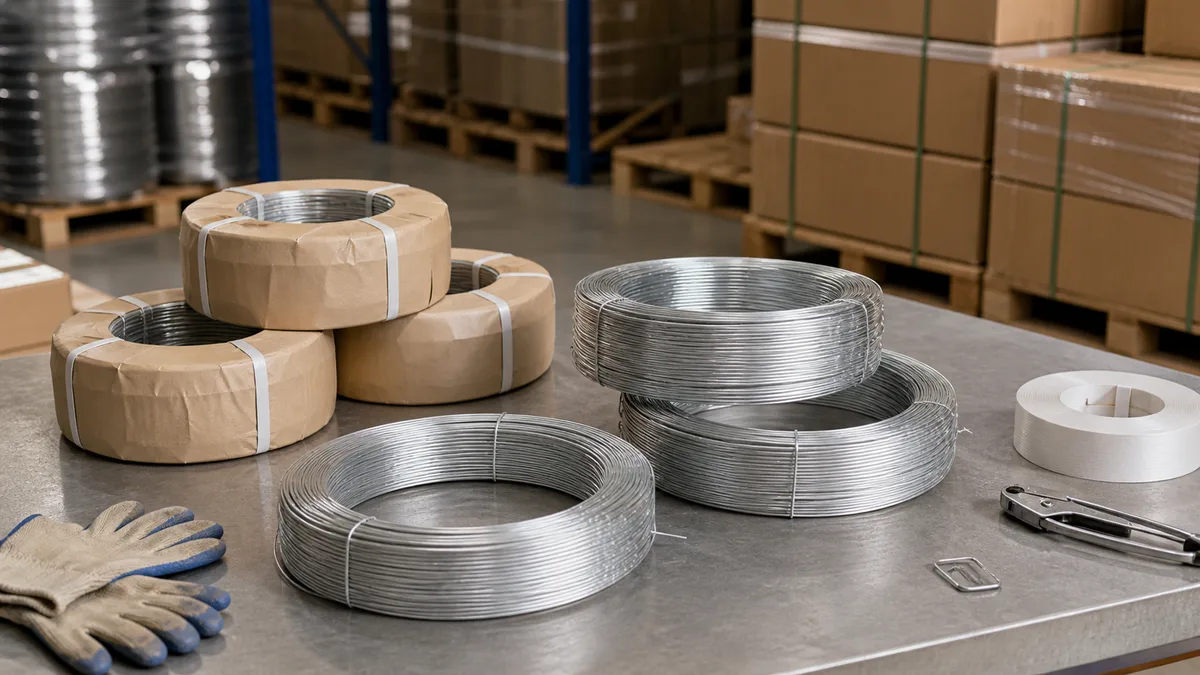
Binding wire is a simple-looking hardware item, but importers still need a clear buying file before quotation. The same product name can refer to different wire diameters, coil weights, surface finishes, coil forms, paper sleeve styles, bundle methods, carton plans, and end-market requirements. If these details are not confirmed early, a buyer may receive a quotation that is hard to compare with other offers.
This guide focuses on Binding Wire for Hardware Supply, Model WIRE-BIND. The product record is prepared for construction tying, bundling, farm use, hardware wholesale, mixed container programs, and importer private label packing. It uses steel wire, with diameter and coil weight confirmed by request, and export packing arranged according to the buyer’s specification.
Why binding wire should stay separate from general wire mesh
Binding wire should not be mixed into one vague wire category. It is different from hexagonal wire netting, welded mesh rolls, chain link fence, barbed wire, iron nails, and cable products. A binding wire quotation should clearly show the coil form, wire diameter, coil weight, surface treatment direction, tie method, and packing requirement.
The broader Wire Mesh section can include several steel wire and mesh products, but each product needs its own quotation logic. Binding wire is usually evaluated by wire gauge or diameter, coil weight, finish, packing protection, and usage scenario. Mesh rolls are evaluated by mesh opening, roll width, roll length, wire diameter, selvage, and roll wrapping. Keeping them separate helps buyers compare each line accurately.
Wire diameter, coil weight, and finish direction
The first confirmation point is wire diameter. Importers may describe this by diameter, gauge, or a local market habit, so the inquiry should make the unit clear. The second point is coil weight. A small coil for retail packing, a medium coil for jobsite use, and a heavier coil for wholesale supply can create very different packing and loading plans.
The third point is surface finish. The product record keeps finish options open by request, which is useful because different markets may ask for galvanized-looking wire, darker annealed-style wire, coated wire, or another finish direction. The buyer should confirm the target use, expected appearance, rust protection expectation, and whether the coil needs a paper sleeve, film wrapping, color label, or simple bundle tie.
Packing choices for hardware importers
Binding wire packing is not only a cost item. It affects shelf presentation, warehouse handling, carton strength, moisture protection, loading count, and after-sales clarity. Common packing discussions may include paper sleeves, bundle straps, carton packing, pallet planning, printed labels, carton marks, and mixed SKU separation. The final choice should match the sales channel instead of copying another market’s packing blindly.
For distributor or construction supply channels, buyers may prefer simple bundle or carton packing with clear coil weight and carton marks. For retail or brand programs, the buyer may need cleaner sleeves, barcode labels, color labels, or carton artwork. If binding wire is included in a larger hardware shipment, packing data should be checked together with the rest of the buying list so the container plan stays practical.
QC photos before shipment
A useful binding wire inspection photo set should show the coil appearance, wire surface, diameter check, coil weight check, coil tightness, bundle tie, paper sleeve or carton detail, carton mark, and final packed quantity. If several diameters or coil weights are included in one order, each item should be separated clearly in the photo set.
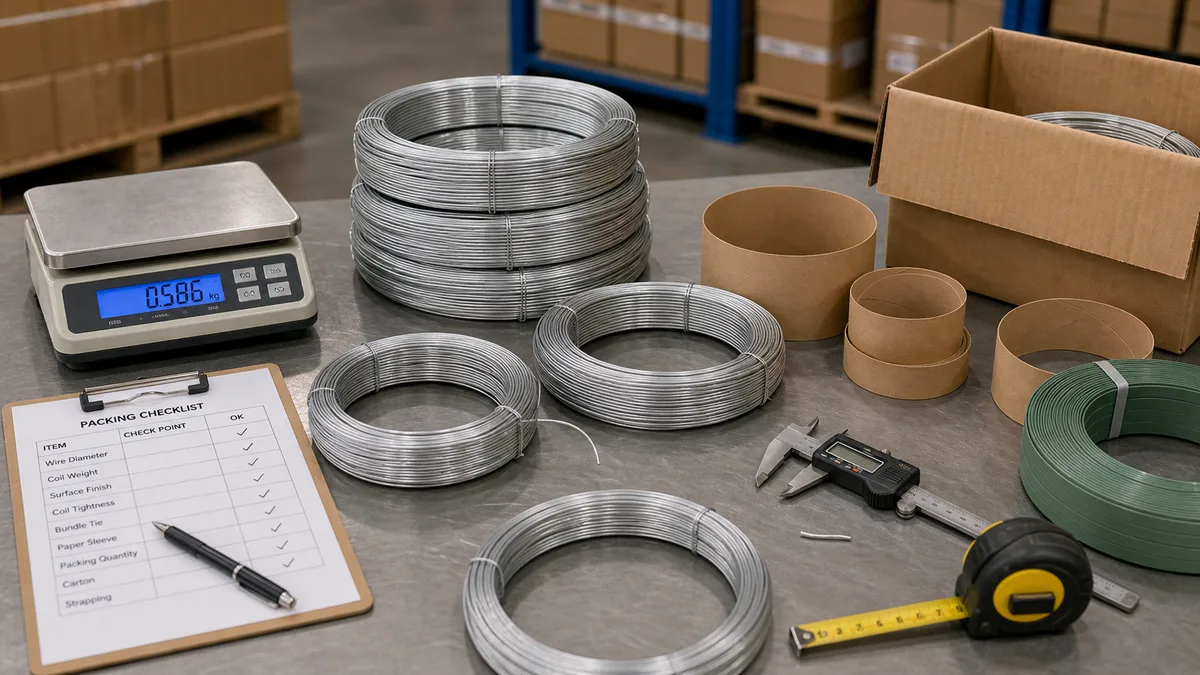
The earlier wire mesh roll specification guide explains how mesh roll orders should confirm opening, roll width, roll length, wire diameter, finish, and roll wrapping. Binding wire follows the same discipline of clear specification control, but the key buying points are coil diameter, coil weight, wire finish, and coil packing.
How binding wire fits one-stop hardware sourcing
Binding wire does not need to be treated as a one-product full-container purchase. Many importers use it as one line in a broader buying list, especially when the order also includes wire mesh, nails, garden tools, agricultural tools, shovels, hoes, rakes, cutting discs, or related construction hardware. The practical goal is to build one cost-efficient container plan from compatible product systems.
The mixed container hardware tools service is useful when a buyer needs multiple hardware categories in one shipment. Binding wire can be combined with other stable hardware SKUs when each line has a confirmed product photo, material note, specification, quantity, packing method, carton mark, and inspection requirement. This gives buyers more flexibility than forcing every product into a separate order.
Best-fit buyer scenarios
Binding Wire for Hardware Supply is suitable for hardware importers, building-material distributors, farm supply buyers, construction supply wholesalers, and mixed-container hardware programs. It is also useful for buyers who want a basic repeat item that can support other products in the same shipment.
For a clear quotation, send the required wire diameter or gauge, coil weight, finish direction, packing preference, target market, order quantity, and whether the item will be shipped alone or combined with other hardware products. If private label packing is required, include sleeve design, label details, barcode requirements, carton mark direction, and any sample photo reference at the inquiry stage.