
A useful hardware tools buying list is more than a list of product names. For importers, wholesalers, and retail chains, the buying list is the first technical document that decides whether a supplier can quote accurately, match the right models, and avoid repeated clarification after the inquiry is sent.
If you are sourcing several lines at the same time, start by separating the request into product groups. A general page such as hand tools wholesale supply is useful for planning the full scope, but the actual inquiry should still identify each category, model reference, packing requirement, and target market.
1. Separate product categories before asking for price
Do not send one sentence such as "quote garden tools and hardware." That is too broad for a meaningful price. Separate the list into product lines such as machetes, sickles, hoes, shovels, pickaxes, forks, rakes, wire mesh, nails, and diamond blades. If the order contains both agricultural tools and building-material hardware, mark them as separate sections in the same buying sheet.
- Cutting tools: machetes, sickles, cane knives, pruning or harvesting tools.
- Soil and digging tools: hoes, shovels, shovel blades, pickaxes, forks, and rakes.
- Hardware supply items: wire mesh, nails, fasteners, steel products, and diamond blades.
- Retail program items: tools that need barcode labels, sleeves, color boxes, or store-ready packing.
2. Use photos or model references whenever possible
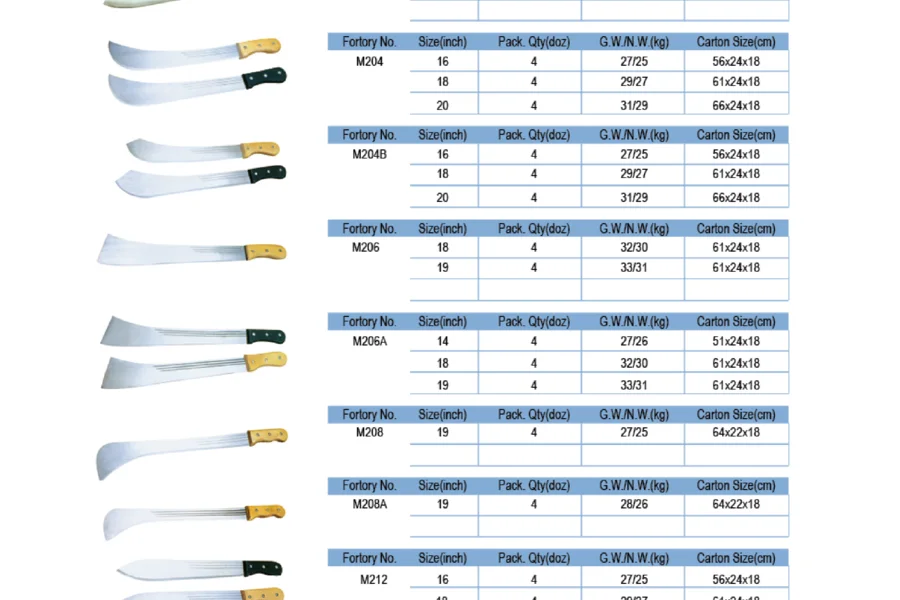
Tool names can mean different things in different markets. A "machete" may be a straight blade, a curved agricultural blade, or a cane knife style. A "hoe" may be sold as head-only or with a handle. Product photos, catalog screenshots, model numbers, and target market examples reduce this uncertainty. For example, if your buying list includes machetes, include blade shape, handle type, edge finish, sleeve requirement, and any local safety text that must appear on the label.
When you do not have a fixed model, provide a reference image and explain the intended use. The supplier can then suggest similar catalog models, possible handle options, and realistic MOQ direction.
3. Add the specifications that affect quotation
For hardware tools, many price differences come from small details. A shovel with a short D-handle and a long-handle shovel may look like the same product category, but the packing size, handle cost, carton length, and loading plan are different. A steel rake head and a finished rake with handle should not be priced as the same item.
- Size or pattern: blade length, head width, tine count, shovel shape, nail length, or mesh opening.
- Material direction: carbon steel, steel head, galvanized finish, wood handle, fiberglass handle, or plastic handle.
- Surface finish: painted, polished, powder coated, galvanized, anti-rust oil, or market color.
- Packing: bulk carton, bundle, paper sleeve, label, color box, inner bag, pallet, or retail display packing.
- Quality control: sample approval, pre-shipment photos, carton mark check, and batch inspection requirements.
4. Put packing and carton marks in the first inquiry
Packing is not a detail to leave until the end. Packing affects MOQ, material use, carton size, labor, loading, and sometimes the unit price. If you need a private label, paper sleeve, barcode sticker, carton mark, or destination-language warning text, include it early. If the order includes building-material products such as nails, mesh, or steel items, review hardware supplies separately because carton weight, roll size, and pallet planning can be more important than retail presentation.
5. Give quantity ranges, not only one target number
Importers often ask for "best price" without giving a quantity. That makes the quotation less useful. Provide the expected order quantity by item or by product line. If the first order is a trial shipment, say so. If the plan is a mixed container, give the expected container type, number of SKUs, and priority items.
A practical format is to use three columns: target quantity, acceptable MOQ, and future repeat-order estimate. This lets the supplier separate sample-stage quotation from stable bulk pricing.
6. Prepare a sample checklist before approving production
Before bulk order, create a short sample checklist. For cutting tools, check blade shape, edge finish, handle fixing, sleeve, label position, and carton mark. For digging tools, check head shape, handle length, paint finish, socket, and carton length. The same logic is explained in the sickle and machete sample checklist, but the method can be applied to most hardware tool categories.
7. Recommended inquiry format
A good inquiry can be simple, but it should be structured. Send the product list, reference photos, model numbers if available, target market, packing requirement, expected quantity, and delivery plan. If you already have a preferred carton mark or label file, mention that it can be confirmed after model selection.
The goal is not to make the first email complicated. The goal is to remove vague wording so the supplier can quote products that match the buyer's real sales channel.