
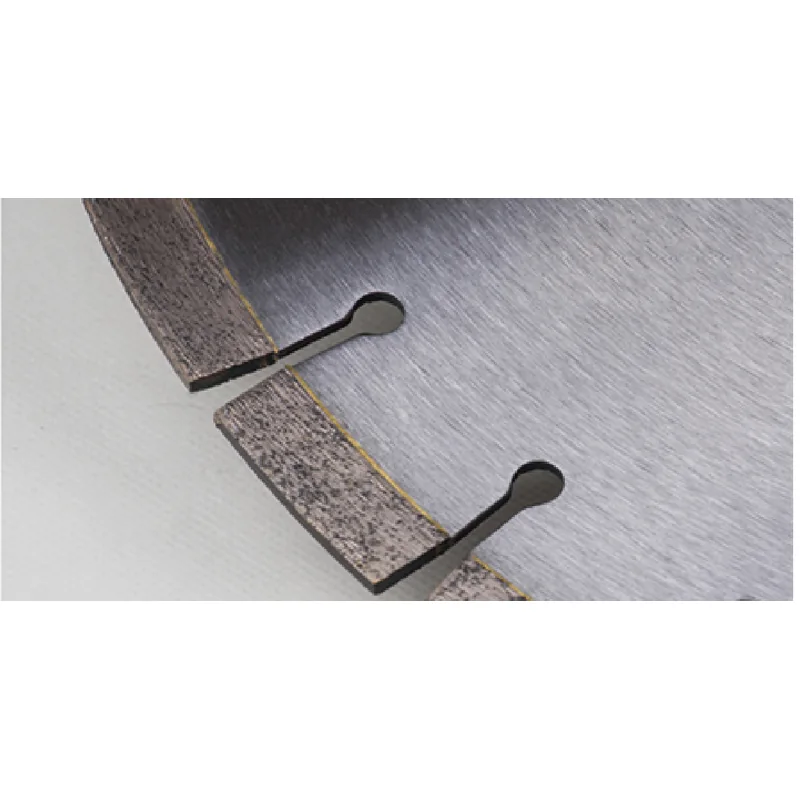
Segmented diamond saw blades are a practical product line for hardware importers, building-material distributors, tile tool sellers, and mixed hardware container buyers. Compared with many hand tools, the specification looks simple at first glance: a round steel core, diamond segments, a center bore, and retail or bulk packing. In real purchasing work, however, small specification gaps can cause wrong-market inventory, unsafe packaging claims, or slow quotation confirmation.
This article uses the Segmented Diamond Saw Blade as the main example. It is suitable for buyers who want a straightforward diamond blade item to add beside hand tools, wire mesh, fasteners, or other building hardware products. If your current buying list already includes masonry accessories, construction hand tools, or mixed carton items, segmented blades can be a useful add-on line when the diameter, bore, application material, and packing method are clearly confirmed before quotation.
Why segmented diamond saw blades are worth reviewing
For many importers, diamond blades are not purchased as a single isolated item. They are often part of a broader construction or hardware range, together with hammers, shovels, wire mesh, nails, safety items, or small cutting accessories. A segmented blade is easy to explain to buyers because the visible segments suggest fast cutting and better debris clearance on suitable masonry materials. That makes it a common starting item for distributors serving construction supply, renovation, stone work, and general hardware channels.
The main advantage is assortment flexibility. A buyer can begin with a limited diameter range, then expand later into different segment styles, rim types, packing forms, and related cutting discs. For a first order, the better approach is not to order too many shapes at once. Start with the diameter and packing style that match your target channel, keep the SKU list clean, and build repeat-order records from approved photos and confirmed carton details.
Specification points to confirm before quotation
A useful segmented blade inquiry should include more than the product name. The first specification is blade diameter. Common retail markets may use different size habits, so the diameter should be written clearly in millimeters or inches. The second point is the bore size, including whether a reducing ring is required. The third point is the segment style, segment height, and intended material range. A segmented blade for general masonry should not be described as suitable for every material unless that claim has been checked for the buyer's market and actual product design.
Buyers should also confirm whether dry cutting, wet cutting, or both are required for the target item. This affects wording, user instructions, and buyer expectations. If the product will be sold in retail packaging, label artwork and safety information need to match the local market. If the order is for bulk distribution, carton quantity, inner protection, barcode needs, and carton marks become more important than shelf appearance.
Packing options for wholesale and retail channels
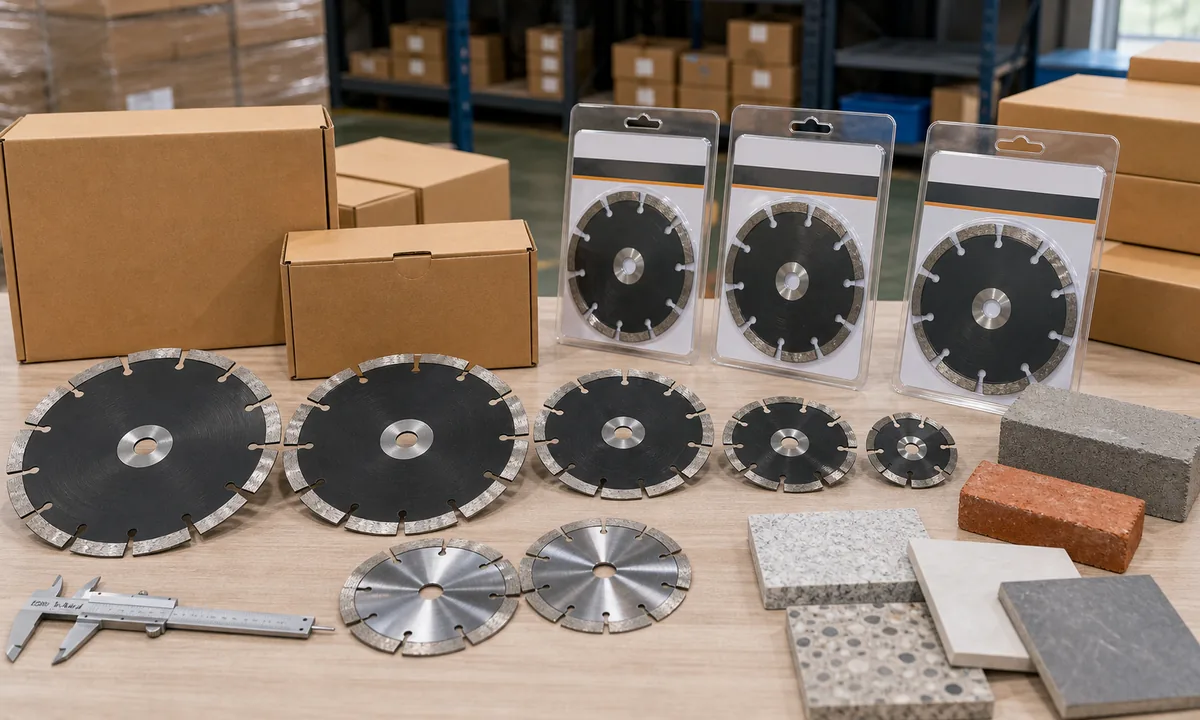
Packing should follow the sales channel. For wholesale cartons, buyers usually focus on unit protection, carton strength, gross weight, and warehouse identification. For retail programs, blister card, color box, label, barcode, and hanging-hole presentation may be required. The article on private label hardware tool packing is useful here because blade packaging has the same basic issue as hand tools: artwork, barcode, warnings, and carton marks must be treated as part of the product specification, not as a last-minute decoration.
For mixed-category orders, keep packing styles consistent where possible. If diamond blades are loaded with hand tools, nails, mesh, or shovels, carton size and carton weight should be checked early. Heavy cartons and fragile display packs should not be planned casually in the same loading layer. A cleaner mixed order starts with SKU grouping and carton data; the broader mixed container hardware tools planning guide explains how to organize that information before shipment.
QC photos and sample approval
Segmented diamond saw blade QC should not rely on one front-facing product image. Before a bulk order, ask for sample photos showing the front and back of the blade, segment shape, bore area, side marking if applicable, packing method, and carton label. For retail packing, request a photo of the packed blade as the customer will see it. For bulk packing, request inner packing and carton stacking photos. These checks help reduce disputes about wrong diameter, wrong bore, incorrect artwork, or weak carton presentation.
If the order is a first cooperation, sample confirmation is especially important. A sample gives the buyer a reference for finish, edge appearance, packing material, label position, and carton mark format. Once approved, keep the photos in the order file. The hardware tools buying list for importers shows how a clean requirement sheet can later become the repeat-order reference for different product lines.
Related blade choices
The segmented type is not the only diamond blade option. Buyers who sell tile installation tools may also compare a Continuous Rim Tile Cutting Blade, which is usually positioned around cleaner tile cutting requirements. For general fast cutting demand, a Turbo Diamond Cutting Disc may also be worth comparing. The right mix depends on the buyer's target customer, price level, packaging plan, and whether the range is for professional channels, hardware stores, or general retail.
For category planning, the Diamond Blades page is the best place to review the current blade range before sending a final inquiry. If the order will be combined with hand tools or building hardware, include expected quantities, destination market, packing style, and any required label or barcode format in the first message. That makes the quotation clearer and reduces back-and-forth.
Best-fit buyers
Segmented diamond saw blades fit importers and wholesalers that already sell construction consumables, masonry accessories, hand tools, hardware store items, or mixed building-material products. They are also suitable for buyers testing a small cutting accessory line before expanding into a broader blade program. For a practical first order, choose a limited diameter range, confirm the bore and packing, approve a sample, and keep QC photos tied to the SKU record.
China Tools Supply can help organize the quotation discussion around model reference, diameter, bore size, packing method, carton marks, sample confirmation, and mixed order planning. Send the target market, size list, packing expectation, and approximate quantity so the product scope can be checked before quotation.