
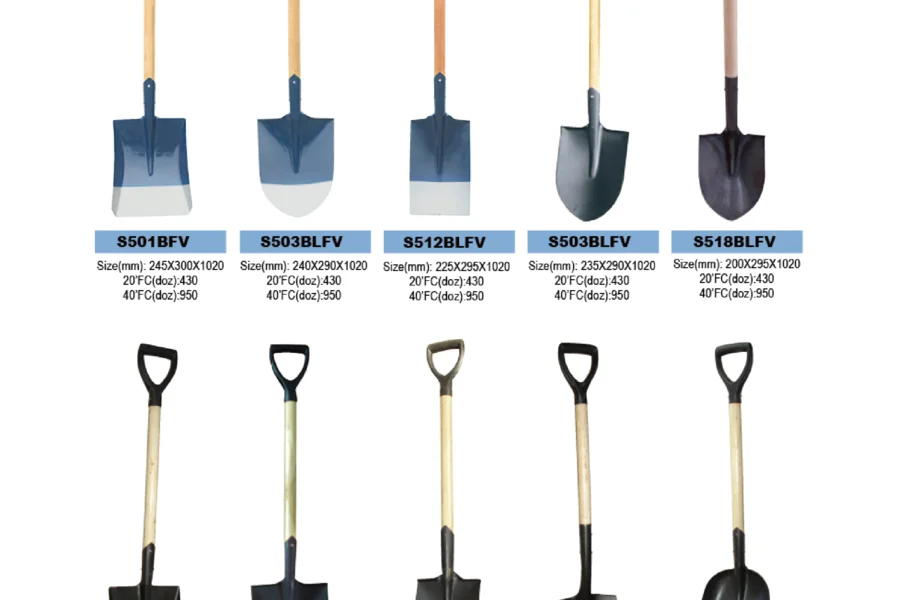
Mixed container hardware orders are useful when buyers need several product lines but do not want to place a full container for only one SKU. The challenge is that mixed orders require more planning than a single-product shipment. MOQ, carton size, handle length, product weight, packing method, and loading priority all affect whether the order can be handled smoothly.
For importers working across agricultural tools, garden tools, and building-material hardware, start by deciding which lines belong together. A broad category such as hand tools can include machetes, sickles, hoes, shovels, pickaxes, forks, rakes, axes, and hammers, but the container plan still needs product-by-product detail.
1. Group SKUs by product type and packing risk
Do not plan the container only by product name. Group the SKUs by physical handling requirements. Long-handle shovels and rakes need different carton planning from nail cartons or wire mesh rolls. Sharp tools need blade protection. Heavy cartons need loading priority. Fragile retail packaging should not be crushed under steel or nail products.
- Long items: shovels, rakes, forks, and handled tools.
- Sharp tools: sickles, machetes, blades, and cutting tools.
- Heavy hardware: nails, fasteners, steel products, and some mesh items.
- Retail packed items: products with sleeves, color boxes, labels, or barcode requirements.
2. Balance MOQ by category
A mixed container does not remove MOQ. It only creates a more flexible order structure. Some items may have low MOQ because they are regular catalog models. Others may require a higher quantity because of custom color, private label, special handle, or production setup. Buyers should mark priority SKUs and flexible SKUs in the buying list.
If your list includes both tools and hardware supply items, review hardware supplies separately. Wire mesh, nails, steel products, and diamond blades are often quoted by size, weight, finish, roll size, or packing weight rather than by piece count.
3. Confirm carton dimensions before final loading
Carton dimensions decide whether the loading plan is realistic. Long-handled tools may limit container space even when the total weight looks acceptable. Nail cartons may reach weight limits before volume is full. Wire mesh rolls and steel products may need pallet or bundle planning. Ask for carton dimensions and gross weight before confirming the final SKU mix.
4. Decide loading priority early
Loading priority should be discussed before production is finished. Heavy products should normally be loaded low and stable. Long tools need space planning. Retail-packed items need protection. If some SKUs are urgent for seasonal sales, mark them clearly so carton marks and packing lists support warehouse unloading at destination.
5. Prepare packing files and carton marks
Mixed orders become difficult when every SKU has a different label format or unclear carton mark. Prepare a simple carton mark rule: product name, model, quantity, gross weight, net weight, carton number, and buyer code if needed. For retail items, confirm label artwork and barcode before bulk packing.
The article on hardware tools buying lists is a useful starting point because a structured buying sheet can later become the production and packing reference.
6. Use QC photos to control mixed shipments
For mixed container orders, inspection photos should cover more than the product surface. Ask for photos of each SKU, label position, inner packing, carton marks, packed cartons, and partial loading if possible. This helps catch wrong labels, missing SKUs, or packing mismatches before the goods leave the packing warehouse or loading area.
7. Include documents and destination requirements
Different hardware products may require different document details. Some markets care about product labeling, carton marks, packing lists, HS code consistency, fumigation for wood packing, or pallet treatment. If the order includes nails and fasteners, carton weight and pallet requirements should be confirmed early because they affect both loading and destination handling.
8. Keep the first mixed order conservative
For a new supplier relationship, do not make the first mixed order too complicated. Start with fewer categories, clear model references, and practical packing. After the first shipment is stable, add more SKUs or custom packing. This approach gives buyers better control over quality, documents, and repeat-order timing.
A mixed container can be efficient, but only when the product list, MOQ, packing, carton marks, QC photos, and loading plan are managed together. Treat it as one sourcing project, not as several unrelated small orders.