
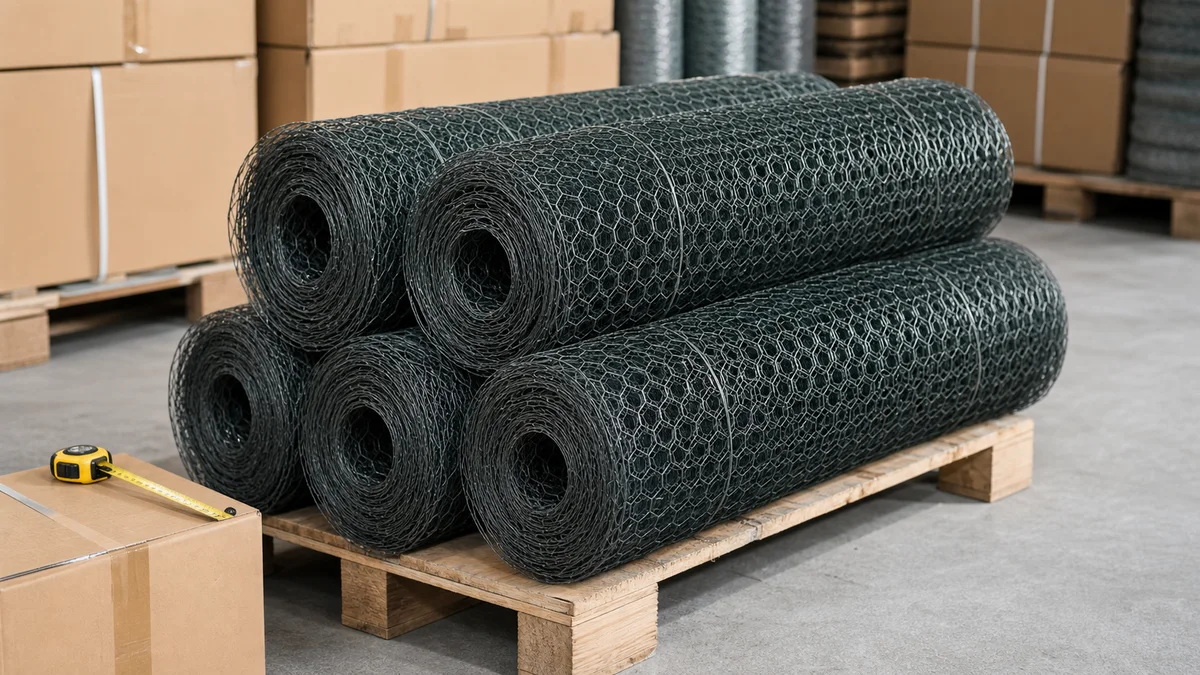
Hexagonal wire netting is a familiar hardware item, but it still needs a clear buying file before quotation. Buyers often use it for poultry mesh, garden fencing, farm protection, light fencing, hardware retail, and mixed building-hardware orders. If the inquiry only says “wire mesh roll,” the quotation may drift toward welded mesh, chain-link mesh, binding wire, or another roll product with a very different structure.
This guide focuses on the Hexagonal Wire Netting Roll. The product reference is a roll-form wire mesh item made with galvanized steel wire, with catalog references including 3/4 inch mesh openings and roll size examples such as 3 ft x 25 m and 6 ft x 25 m. Buyers should confirm the mesh opening, roll width, roll length, roll weight, finish requirement, packing method, and target application before requesting a final quotation.
Why hexagonal netting should stay separate from general wire mesh
Hexagonal wire netting has a twisted honeycomb-style pattern. That makes it different from welded wire mesh panels, welded mesh rolls, chain-link fencing, and simple binding wire. The buyer may purchase these products from the same hardware supply plan, but each item needs its own model photo, opening size, roll size, weight, packing note, and application description.
The broader Wire Mesh category is useful for comparing related roll and mesh products, but the hexagonal netting line should remain clearly identified. This helps the buyer, sourcing team, packing team, and inspection team check the correct item before shipment.
Main specification points to confirm
The first point is mesh opening. For this product, the catalog reference includes 3/4 inch mesh. If the buyer’s market uses another opening, the inquiry should include a photo, sample, or written size reference. The second point is roll size. A 3 ft x 25 m roll and a 6 ft x 25 m roll are not handled the same way in packing, warehouse storage, or container loading.
The third point is material and finish. The product record uses galvanized steel wire, while market finish options can be discussed by request. Some buyers need a basic galvanized finish for practical farm use. Others may ask for coated finish direction, retail sleeves, or color-related presentation. These choices should be confirmed before quotation because they affect cost, packing, appearance, and buyer acceptance.
Roll weight, packing, and carton planning
Roll weight is important because wire mesh goods can become heavy quickly. The catalog reference includes examples such as 3 ft x 25 m x 3 kg and 6 ft x 25 m x 6 kg. These should be treated as reference points, not a final universal specification. For quotation, ask the supplier to confirm the actual roll weight together with mesh opening, wire diameter direction, roll width, roll length, and packing method.
Packing can be arranged by export carton, bundle, paper sleeve, color box, or retail packing depending on the item and buyer channel. A farm supply distributor may prefer practical bundle packing, while a hardware retail buyer may need a cleaner outer sleeve, label, barcode, and carton mark. The broader wire mesh roll specification guide explains why opening size, roll size, finish, and packing should be written into one file instead of scattered across messages.
QC photos that make repeat orders easier
Before bulk shipment, request photos that show the roll appearance, mesh opening, roll width, roll length direction, roll edge, roll label, packing method, carton or bundle mark, and final loading view. If several mesh products are ordered together, each SKU should have its own photo group. A small difference in pattern can change the product completely.
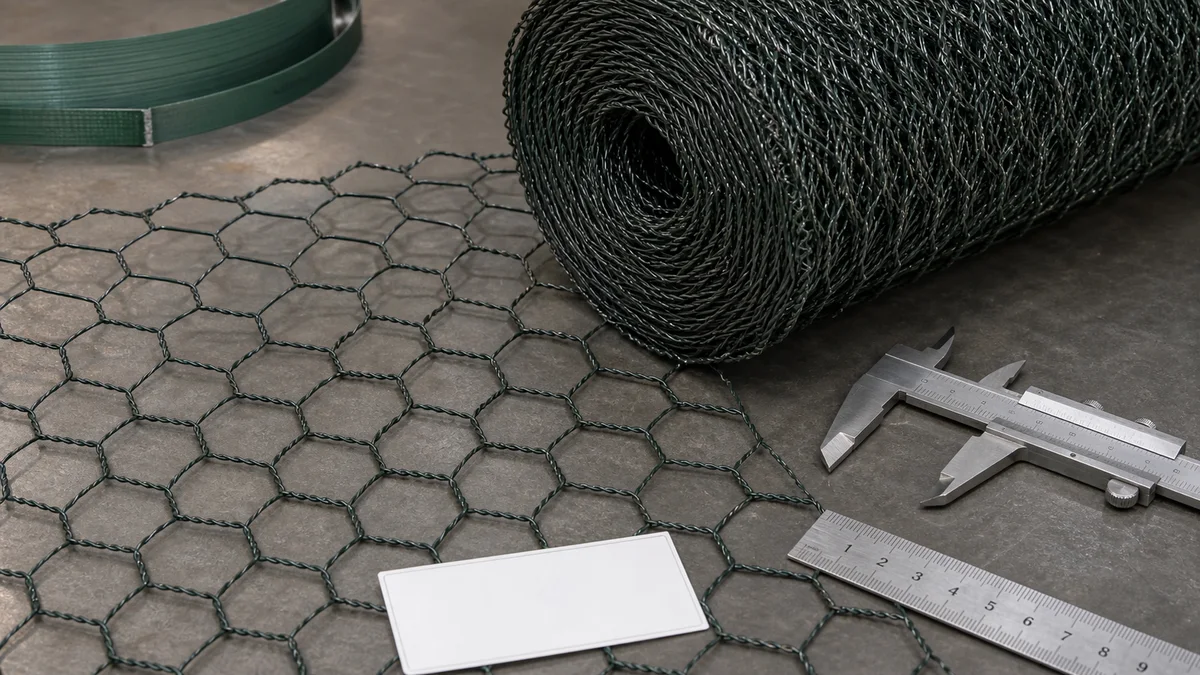
For sample approval, a buyer should keep the approved product photo, mesh opening reference, roll size, finish note, packing note, carton mark, and target market in the same record. This is especially useful when the order repeats months later or when the buyer adds related products such as welded mesh, binding wire, nails, or steel products.
How to include it in a mixed hardware order
Hexagonal wire netting rolls can work well in mixed hardware orders, but they should be planned by carton size, roll weight, and loading protection. Mesh rolls can be combined with binding wire, nails, hand tools, shovel blades, garden tools, and related construction hardware when the product list is organized clearly.
The mixed container hardware tools service is relevant when a buyer does not need a full container of one mesh product. Instead, several hardware systems can be combined into one cost-efficient order. In that case, hexagonal netting should be grouped with other roll or hardware items by weight, carton shape, packing strength, and unloading convenience.
The article on mixed container hardware tools planning explains why SKU photos, carton data, and loading notes should be prepared before shipment. For wire mesh rolls, this planning step matters because the product may be bulky, and roll edges need protection from deformation during handling.
Best-fit buyer scenarios
Hexagonal Wire Netting Roll fits poultry mesh buyers, garden fencing importers, farm supply wholesalers, hardware retail channels, and distributors that want a practical roll-form mesh item beside nails, binding wire, and general hardware products. It can also be used as a supporting item in a construction hardware system when the buyer needs several related products in one shipment.
For a clear quotation, send the product photo or model name, mesh opening, roll width, roll length, expected roll weight, finish preference, packing method, quantity, and destination market. A structured buying file like the one described in the hardware tools buying list for importers helps keep product names, photos, sizes, packing, carton marks, and shipment notes aligned from quotation to delivery.