
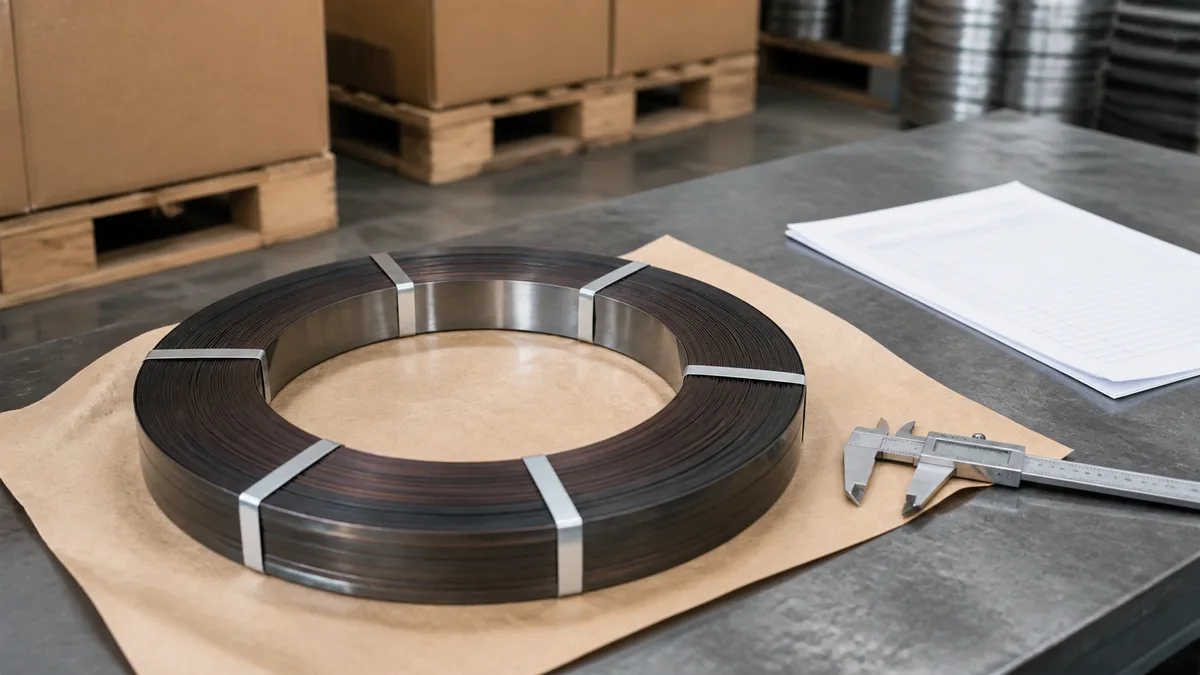
Spring steel strip is not a finished hand tool, but it can be an important purchasing item for buyers who handle tool blade programs, replacement blade supply, semi-finished blade processing, or wider hardware material orders. A small difference in grade direction, strip thickness, edge condition, or surface protection can affect downstream cutting, forming, heat treatment, packing, and final product consistency.
This guide focuses on Spring Steel Strip for Tool Blades, a steel material item listed for buyers who need clear product photo confirmation, specification discussion, and export packing coordination before placing a bulk order. The product image shows a dark narrow steel strip coil tied with metal straps, so the quotation should be handled as a steel strip material inquiry rather than a finished sickle, machete, or shovel item.
Why importers add spring steel strip to a hardware buying list
Many hardware importers buy finished hand tools, but some buyers also need material items for local processing, replacement blade programs, or supply to downstream tool workshops. Spring steel strip can fit that role when the buyer has a clear blade application and can confirm the required specification range. It may be purchased separately or together with finished agricultural tools, garden tools, fasteners, wire mesh, and other hardware items.
For trading and wholesale buyers, the practical value is not only the material itself. It is the ability to organize the correct steel strip reference, sample confirmation, packing protection, and container planning with other products. If the buyer is already reviewing the wider Steel Products category, spring steel strip should be separated from cold rolled strip, galvanized sheet, and general coil steel because the application and confirmation points are different.
Specification points to confirm before quotation
A useful inquiry should start with the target application. For tool blade programs, buyers should describe whether the strip is intended for agricultural blades, utility blades, replacement blade blanks, or another hardware component. This helps narrow the discussion before price comparison.
The next details are grade direction, thickness, strip width, coil inner diameter if required, edge condition, surface finish, and packing method. If the buyer already has a drawing, previous purchase specification, or sample piece, include it with the inquiry. If not, send the intended blade type, expected processing method, target market, and estimated order quantity so the quotation scope can be matched more accurately.
For steel strip, thickness and width should be stated clearly instead of only using a product photo. Surface expectations should also be defined. Some buyers mainly need a practical industrial surface for further processing, while others need stronger surface protection because the goods will move through a longer export route or warehouse period.
Sample and document review
Before a bulk order, buyers should keep a simple approval file. The file can include the product photo, specification sheet, sample strip measurement, packing photo, and any agreed tolerance notes. This is especially important when several steel materials are being quoted at the same time, because coil steel, cold rolled strip, galvanized sheet, and spring steel strip can be confused in an email thread if the model and specification are not labeled consistently.
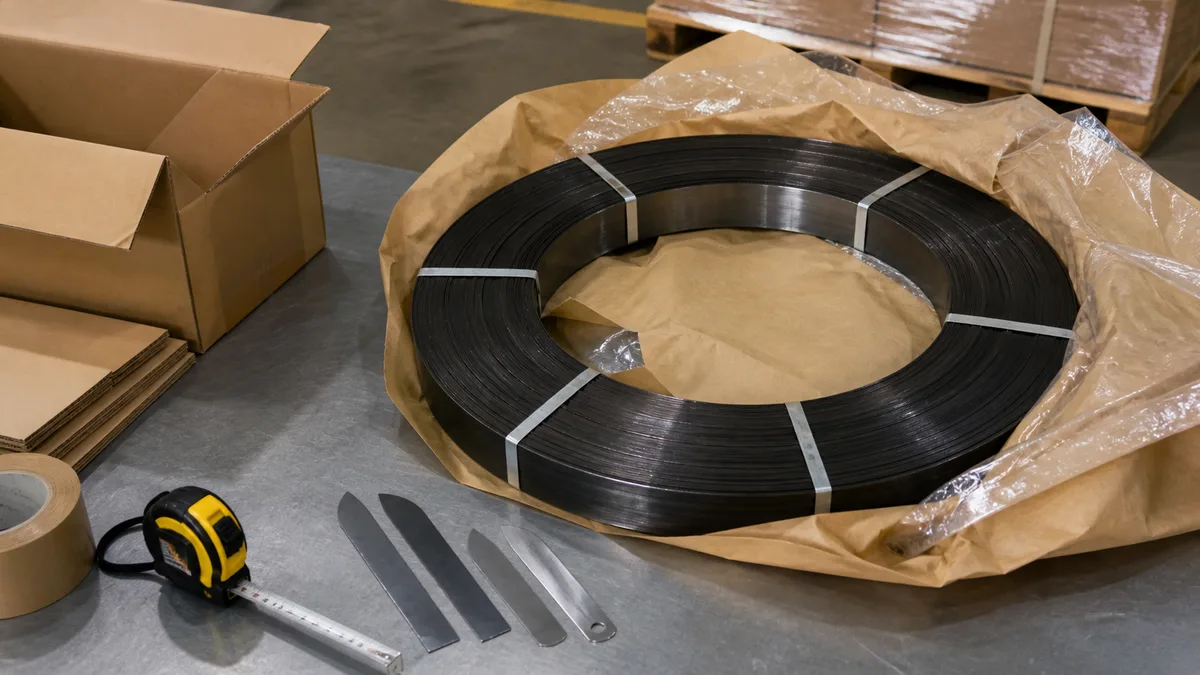
Useful sample photos include the full coil, side view of the strip layers, metal strap position, surface close-up, edge view, and packing protection. If a sample piece is cut from the strip, measure the sample and label it with the same product name used in the quotation. This makes later comparison much easier for the buyer, the sales team, and the packing follow-up team.
Packing and rust-prevention notes
Steel strip packing should protect the coil during storage, loading, sea transport, and local warehouse handling. Common discussion points include protective paper, film wrapping, moisture control, metal straps, pallet or crate planning, outside marks, and safe handling notes. The correct packing decision depends on coil size, order quantity, destination climate, and whether the buyer will store the goods before processing.
When the order includes private label cartons or mixed hardware goods, keep material items and finished tools clearly separated in the packing file. Finished tools may need retail labels, hang tags, or color boxes, while steel strip needs industrial protection and clear specification marks. The article on private label hardware tool packing is still useful for understanding how label artwork, carton marks, and buyer-side warehouse requirements should be confirmed before shipment.
How it fits with finished tool programs
Spring steel strip can support buyers who already handle tool blade categories, but it should not be treated as the same SKU type as a finished machete, sickle, hoe, or shovel. Finished tools are checked by appearance, handle fit, blade shape, retail packing, and carton data. Steel strip is checked by material specification, size range, surface condition, coil packing, and downstream use.
If a buyer is sourcing both material and finished tools, it is better to list each item line by line. For example, keep spring steel strip, sickles, machetes, hoes, and shovel blades under separate lines with their own photos, specifications, quantities, packing notes, and target delivery plan. This is the same principle used in mixed container hardware tools planning, where clear item separation helps reduce mistakes before inspection and shipment.
Best-fit buyer scenarios
This item is suitable for steel material distributors, hardware importers with blade-related programs, tool component buyers, and wholesalers who need steel strip together with a broader hardware order. It can also fit buyers who want to test a material item before adding more steel products to a purchasing program.
For a clear quotation, send the product name, required grade direction if available, thickness, width, coil size requirement, surface expectation, target quantity, destination market, and packing preference. If the inquiry is connected with a finished blade or tool product, include that application as a reference. China Tools Supply can then help organize the product reference, sample confirmation, packing photos, and export order follow-up with the right scope.