
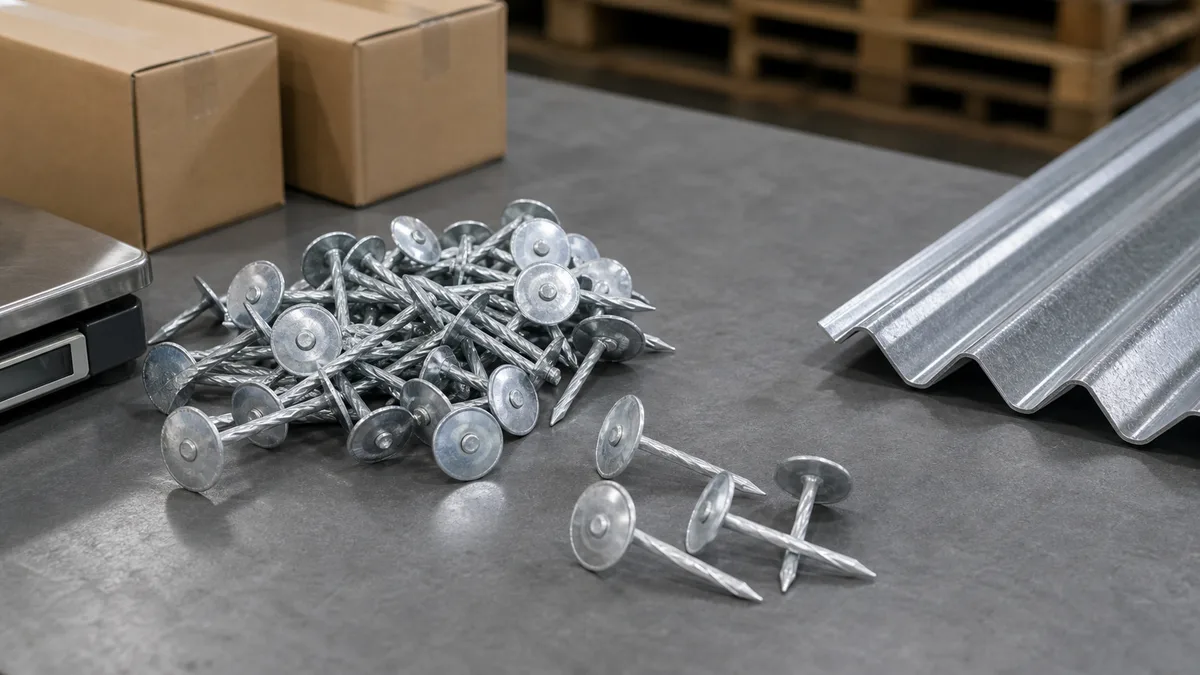
Roofing nails with umbrella heads are small fasteners, but they require more specification control than a generic nail item. The head shape, shank style, length, wire diameter, point, galvanized finish, packing weight, and carton mark all affect quotation accuracy and buyer acceptance. Importers who serve roofing-material channels, building-material distributors, and hardware wholesalers should treat this product as a dedicated fastener line instead of grouping it under a simple “iron nails” label.
This guide focuses on Roofing Nails with Umbrella Head. The product reference shows galvanized steel roofing nails with wide round umbrella heads, twisted or spiral shanks, and sharp points. Those visible features should stay clear in the inquiry file, sample approval photos, packing photos, and repeat order records.
Why umbrella head roofing nails need a separate quotation
Common nails, concrete nails, and roofing nails may all appear in a building hardware assortment, but buyers do not specify them the same way. Roofing nails with umbrella heads are often selected for roofing sheets and related building-material programs where the head profile matters. A buyer comparing them only by weight or carton price can easily miss head diameter, shank form, finish, and packing details.
The broader Nails & Fasteners category is useful for comparing related nail items, but a roofing nail order should keep its own model reference, photo, size table, and packing plan. This makes quotation review cleaner and helps the buyer avoid mixing roofing nails with common iron nails or concrete nails.
Specification points to confirm
A clear roofing nail inquiry should include nail length, wire diameter, head diameter, shank type, point style, surface finish, packing weight, and target market. If the product should have a twisted or spiral shank, state that clearly. If the market uses a smooth shank or ring shank style, the buyer should send a photo or previous sample so the quotation does not drift toward the wrong nail type.
Galvanized finish is another important point. Buyers should confirm whether the finish is acceptable for the target roofing-material channel and whether the order needs standard bulk packing, inner bag packing, retail box packing, or pallet planning. For fasteners, packing style can change handling cost, carton weight, and warehouse convenience.
Sample approval and QC photos
Before a bulk order, request sample photos that show the full nail, head close-up, shank, point, galvanized surface, and packing method. A simple product photo is not enough if the buyer needs to compare several nail types in one order. The approved sample file should identify the product name, model reference, size, finish, packing weight, and carton mark requirement.
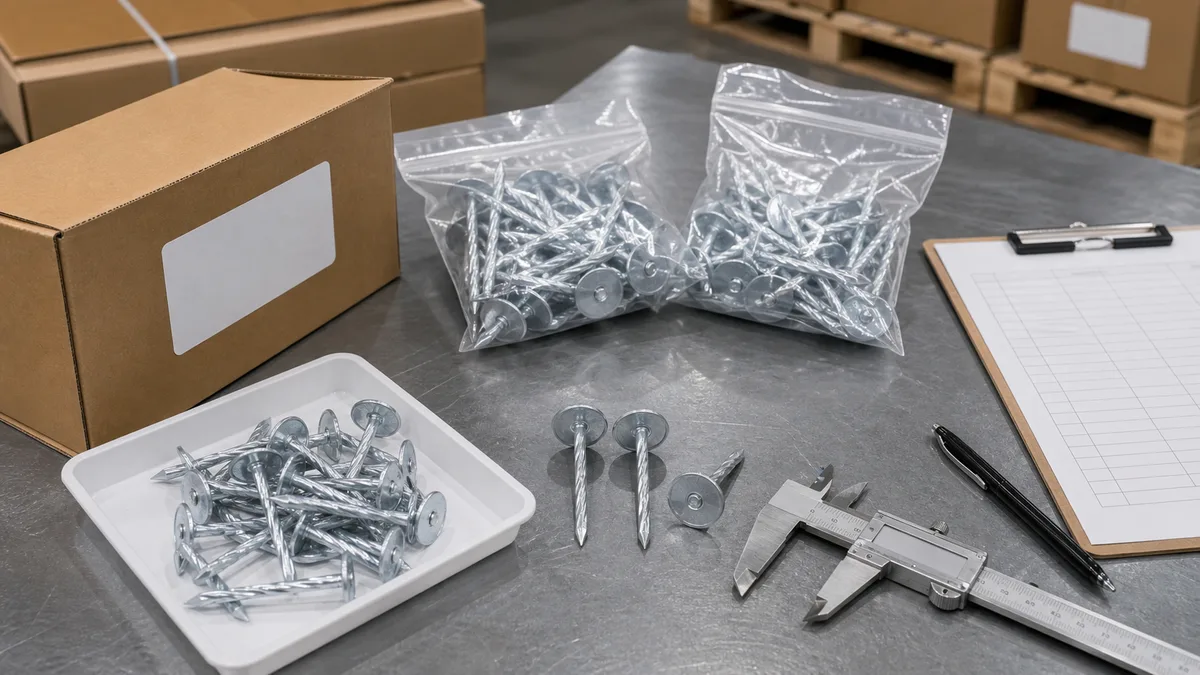
For shipment follow-up, useful QC photos include the nail appearance, head diameter comparison, shank close-up, point shape, bag or box packing, carton mark, carton weight reference, and final carton stack. If several nail sizes are packed in the same order, each size should be photographed and labeled separately before shipment.
Packing weight and carton mark decisions
Roofing nails can be shipped in bulk cartons, inner bags, small boxes, or mixed packing programs depending on the buyer’s sales channel. A building-material distributor may prefer practical bulk packing, while a retail hardware channel may need smaller packs, labels, or barcode-ready packaging. These details should be confirmed before quotation because the same nail size can have different landed cost depending on packing method.
The article on private label hardware tool packing is relevant when the buyer needs label artwork, carton marks, barcode labels, or retail presentation. Even if the roofing nails are not sold under a full private label, carton marks and inner packing should still be confirmed early so the warehouse can identify each size quickly.
How to include roofing nails in a mixed hardware order
Roofing nails are often purchased with common nails, concrete nails, binding wire, wire mesh, roofing sheets, hand tools, and other building hardware items. In a mixed order, fasteners should be listed by nail type and size rather than grouped into one loose “nails” line. This prevents confusion during sample approval, carton marking, and final inspection.
The iron nails and fasteners buying checklist explains how importers can structure a general fastener buying file. For umbrella head roofing nails, the same discipline applies, but the head style and shank type should receive extra attention because they define the product more clearly than a simple length description.
Best-fit buyer scenarios
Roofing Nails with Umbrella Head fit building-material distributors, roofing supply buyers, hardware wholesalers, construction channels, and importers building a fastener section for mixed hardware containers. They are also suitable for buyers who want a dedicated roofing fastener line beside common nails and concrete nails.
For a practical quotation, send the product photo or model name, nail length, wire diameter, head diameter, shank type, finish requirement, packing weight, target quantity, and destination market. China Tools Supply can then organize the product reference, sample confirmation, packing photos, carton mark review, and export order follow-up with the right scope.