
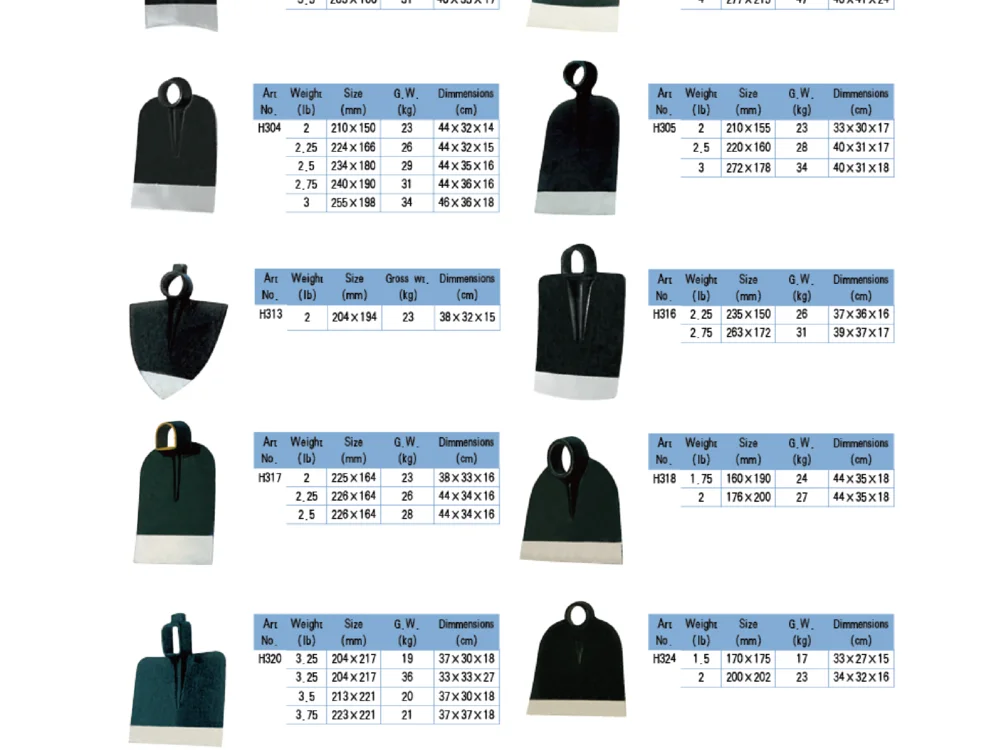
Shovels and hoes are often quoted together because they serve similar agricultural and garden channels, but they should not be treated as the same product during sourcing. A shovel may be sold as a blade only or as a finished tool with a wood, fiberglass, plastic, or steel handle. A hoe may be a head-only item for local handle assembly, or a finished product packed for wholesale and retail distribution.
For importers, the practical question is not only which model looks correct. The buying decision should include product form, handle requirement, head shape, surface finish, packing length, carton weight, and the way the items will be loaded with other tools. This guide explains how to compare shovels with handle, shovel blades, and steel hoes before requesting quotation.
1. Separate blade-only and finished-tool orders
A blade-only shovel order is different from a finished shovel order. Blade-only shipments are usually easier to pack densely, while finished shovels need carton length planning and may affect container loading. The same applies to hoes: some buyers import heads only and install handles locally, while others need complete tools packed by dozen or by carton.
When sending an inquiry, mark each item as head-only, handle-only, or complete tool. If both options are acceptable, ask the supplier to quote them separately. This avoids confusing the unit price, carton size, and MOQ.
2. Compare head shape and working use
Shovel and hoe names are not always consistent across markets. Round-point shovels, square shovels, drain shovels, spades, eye hoes, draw hoes, and digging hoes may all be described differently by local buyers. Use model photos and market references instead of relying only on the English name.
- For shovels, confirm blade shape, socket type, blade thickness direction, and whether the model is blade-only or with handle.
- For hoes, confirm head width, eye size, blade shape, weight direction, and whether the tool is supplied with a handle.
- For both categories, confirm paint, polish, powder coating, anti-rust oil, or other surface finish expectations.
3. Handle choice changes packing and cost
Handle material is one of the main cost and logistics variables. Wood handles may need attention to diameter, length, finish, moisture condition, and destination documentation. Fiberglass handles usually require color and grip confirmation. Plastic D-handles or steel handles change packing shape and carton strength.
If the order is a mixed container, do not approve handles only by product photo. Ask for carton size, gross weight, and sample photos of the handle fixing. The broader mixed container planning guide explains why long tools should be handled separately in the loading plan.
4. Define packing before confirming final price
Shovel and hoe packing can be bulk bundle, export carton, head-only carton, paper sleeve, label, barcode sticker, or retail-ready packing. For head-only products, carton weight matters. For complete tools, carton length and shipping volume matter. If the product will be sold through retail stores, label position and product name consistency should be checked before production.
5. Sample checks before bulk order
For samples, check head size, shape, surface finish, socket or eye opening, handle fit, label position, and carton mark. If the approved sample is head-only but bulk order later becomes complete tool, request a new complete-tool sample because handle fixing and packing risk are different.
6. A practical inquiry format
A clear inquiry can remain short: product photo, model or target shape, head-only or with handle, handle material and length, surface finish, packing method, expected quantity, and target market. If the buyer is still comparing options, the supplier can suggest similar catalog models and practical MOQ direction.
For wholesale programs, shovels and hoes work best when the buyer builds a stable assortment instead of buying one isolated SKU. A focused list makes quotation faster, sample approval clearer, and repeat orders easier to manage.